If I had to pick a single album that had the most impact on my musical journey as a teenager, it would be Queensrÿche’s 1988 heavy metal concept album, Operation: Mindcrime. Allow me to set the stage. In May 1988, I was finishing my junior year of high school. I had been playing bass and guitar in bands for a little more than two years and had reached a level of competency that let me play most of my favorite music with some degree of accuracy. My tastes had been moving away from the mainstream hard rock of the day, like Mötley Crüe, Bon Jovi, and Def Leppard, and toward heavier, more complicated metal like Iron Maiden, Anthrax, and Metallica, with a growing appreciation for classic prog rock bands like Pink Floyd and Rush.
For years, Queensrÿche had been living in an interesting space in between the subgenres of heavy metal, and I loved everything they had released. Their 1983 self-titled EP and 1984 follow-up, The Warning, were among my favorite records of the decade and fell neatly in with American bands heavily influenced by the New Wave of British Heavy Metal. Then in 1986, they released Rage for Order, a progressive hard rock masterpiece exploring themes like artificial intelligence, technological advancements, and government intrusion. They brought synthesizers to the forefront of their heavy double-guitar sound, but instead of making their music more poppy and friendly, the approach made it darker and more eerie. It was like heavy metal science fiction.
Fast-forward to the spring of 1988. Operation: Mindcrime seemed to come out of nowhere. I don’t remember seeing much press about it before it was suddenly in all of my friends’ tape players. The album flowed from one song to the next, linked together with ambient sounds and voices acting out snippets of what sounded like movie scenes. Queensrÿche already had a cult following, but they weren’t nearly big enough to be significantly covered by the mainstream press. So we knew nothing more about it than the sounds on the album and the liner notes on the cover. Was this the soundtrack to a movie? Who are these voices? What does it all mean? It was clearly some kind of heavy metal, story-based concept album, with the narrative hidden in the lyrics. It spread like wildfire through the metal world and the metal press, and was immediately compared to Pink Floyd’s The Wall, only for the metal generation. It was heavy, yet accessible. It was progressive, yet had hooks. The musicianship was nothing short of remarkable. In my circles, it was immediately recognized as a masterpiece.
The story of Queensrÿche became rather complicated in the four decades that followed. They reached greater mainstream success in 1990 with their follow-up album, Empire, and the hit single “Silent Lucidity.” Then, like most big metal bands of the 1980s, they saw a rapid decline in popularity and record sales through the 1990s, though they continued releasing albums and playing smaller rooms to their cult following through the 2000s. The 2010s led to lead singer Geoff Tate being fired from the band, followed by two different Queensrÿches for a couple of years, and ultimately a final decision where Tate could no longer use the Queensrÿche name, though he could continue to perform Operation: Mindcrime and its sequel in their entirety. So, in another parallel to the Pink Floyd story—where Roger Waters continued to perform The Wall as a solo artist after the band’s breakup in 1985—Tate has continued to perform Operation: Mindcrime to this day.
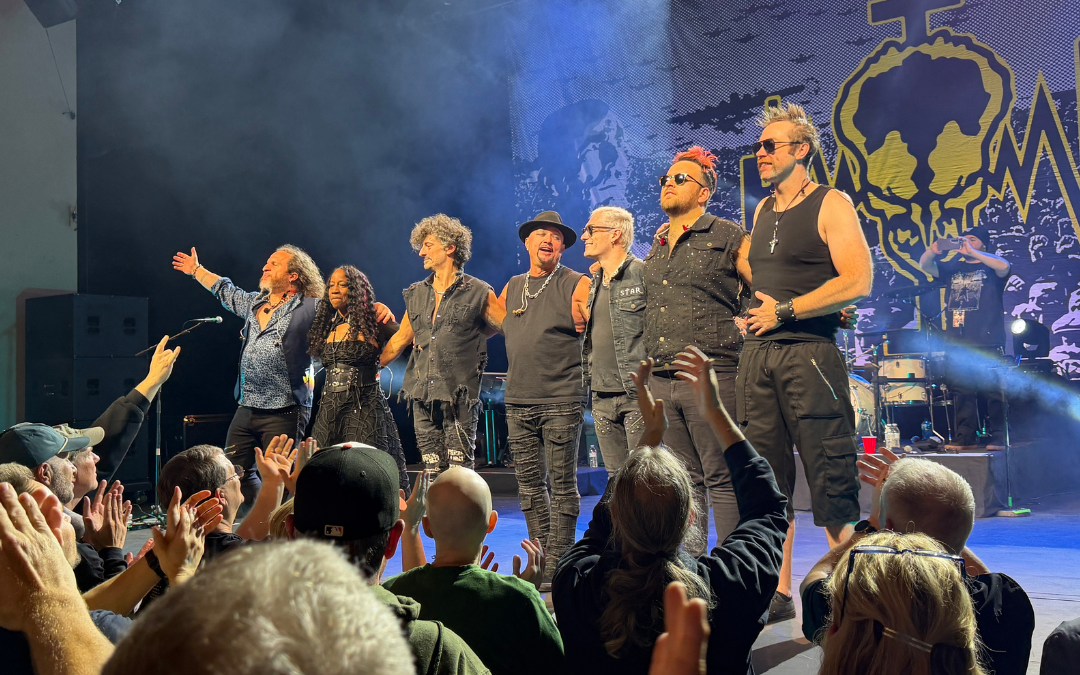
That brings us to the Appell Center for the Performing Arts in York, PA, on November 17, 2026. Tate and his band are in the middle of a two-year world tour called Operation: Mindcrime: The Final Chapter. This will be the last tour where Mindcrime is performed in its entirety. Being so close to home, and in such a beautiful theater, I decided to grab a ticket and experience this epic record once again myself. Admittedly, I can’t remember the last time I listened to it from front to back, so I revisited the studio recordings a few times leading up to the show, and for my taste, it’s held up beautifully over the years.
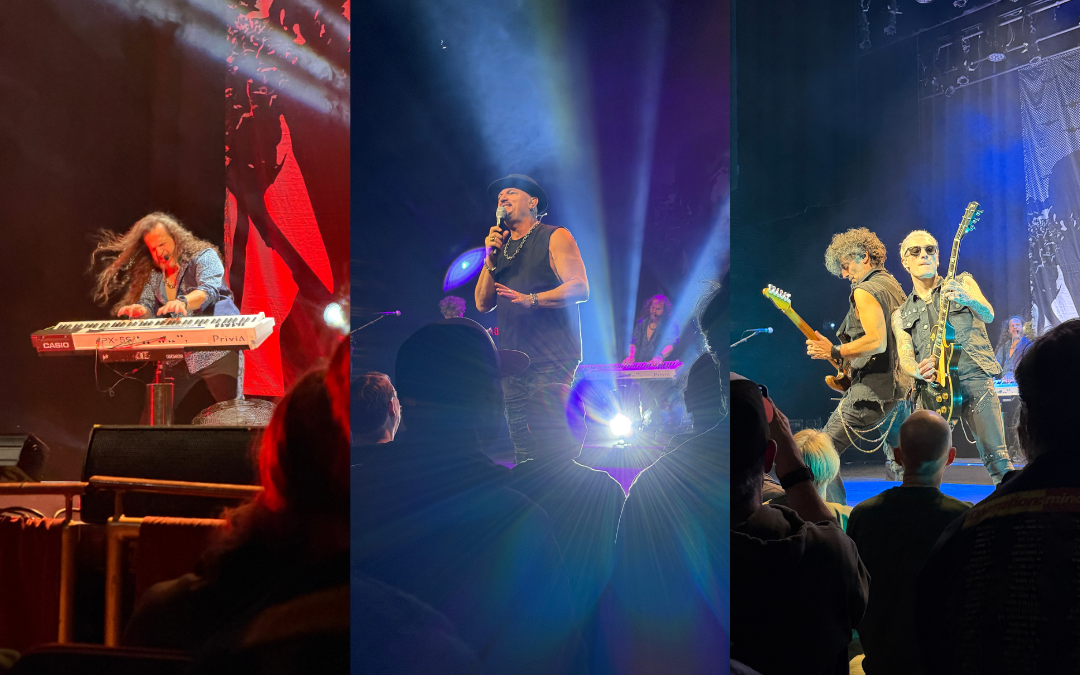
I found the show itself to be interesting on many levels. This was definitely a budget tour. There was a large Operation: Mindcrime banner behind the stage and a basic light show, which was the gist of the effects. There were no amps on stage, and electronic elements on the drum kit, like the cymbals, indicated that all of the instruments were modeled. And I’m pretty sure that the guest female vocalist who sang the Sister Mary parts was selling merch before the show. All that said, the sound overall was pretty good. In fact, I did my best to determine if there was any lip-syncing or backing tracks going on, but that didn’t seem to be the case at all.
Where things got a little weird for me was the makeup of the band. Four of the six main players (excluding the guest vocalist) in the international ensemble looked like a Warped Tour band from 20 years ago, while the keyboard player looked and acted like a cross between Spinal Tap and Jack Black at a Renaissance Faire. To me, his aesthetic was actually more aligned with Geoff and the vibe of old-school metal, especially on tracks like “Take Hold of the Flame” and “Queen of the Reich.” As much as I complain about old metal guys looking too old to be playing metal, I would have preferred that aesthetic overall. Don’t get me wrong, they were all excellent players and reproduced the music like a world-class tribute band, but I felt like the look and feel were a little disjointed.
Geoff sounded remarkable for a 67-year-old performing songs that would push any vocalist at any age. He was a bit overly dramatic during the full performance of Operation: Mindcrime, seemingly acting out Nikki’s parts, though he kind of did the same actions throughout the entire album—sort of stumbling around looking worried. He hit some incredible high notes, but also seemed to know when to make necessary adjustments. After the full performance of Mindcrime and a new track from an upcoming album (OM Part III, apparently), they played a Queensrÿche greatest hits mini-set, featuring a track from the EP, one from The Warning, and a few from Empire. Geoff definitely got pitchy during the Empire tracks, but I can’t fault him. It’s a hell of a show to pull off, especially after being on the road for over a year. I have a lot of respect for him, and a lot of love for the music he made all of those years ago. While the show wasn’t perfect, it was wonderful to celebrate that music and enjoy the flood of memories that came over me for those couple of hours in York.