
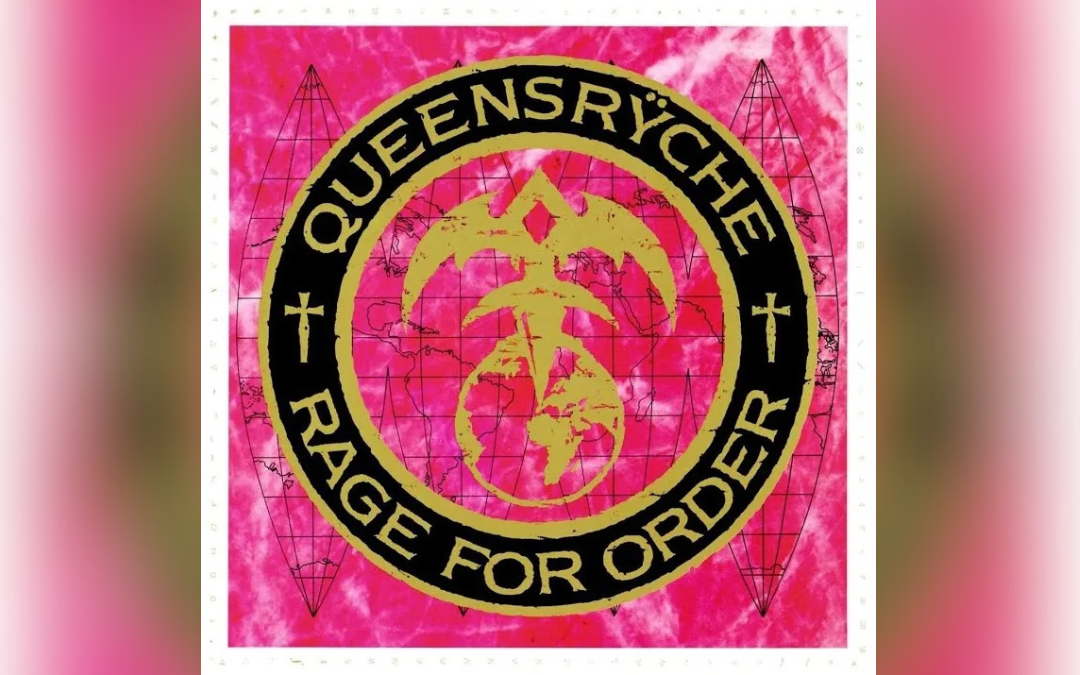
I recently came across a video by Robert John Hadfield from the AudioMover YouTube channel about Queensrÿche’s epic 1986 release, Rage for Order.
For some context, during the summer of ‘86, I was soon to be 15 years old and between my freshman and sophomore years of high school. At that point, I was deep into heavy metal culture, but I was on the cusp of transitioning away from the most commercial acts of the day, like Mötley Crüe, Ratt, and Dokken, and toward heavier acts like Metallica, Megadeth, and Anthrax. There was a thread of metal that lived between these two extremes, inspired by the New Wave of British Heavy Metal, including Motorhead, Judas Priest, and most notably for me, Iron Maiden. In this middle ground which we considered straight up heavy metal were a couple of bands that had a huge impact on me: Armored Saint and Queensrÿche. I’ll save Armored Saint for another day.
The first two Queensrÿche releases, the self-titled EP (1982) and The Warning (1984), were a killer collection of Maiden-esque straight ahead metal. When the new album was released in ‘86 I didn’t hesitate to pick up a copy. In those days there was no “try before you buy”, you just rolled the dice, and Rage was definitely not what I expected.
At the time, the use of keyboards and synthesizers was very controversial in the metal world. As the genre became more and more polarized between the mainstream acceptance of pop and glam metal, and the speed and power of the rising thrash metal movement, the use of keyboards were seen by metal heads as a sell out move for poseurs, who are only seeking mainstream appeal. Bands like Van Halen, Bon Jovi, Europe, and even Mötley Crüe didn’t seem to care about that position, and were utilizing synths and rising to the top of the music industry.
Somehow Queensrÿche managed to break all of the rules of the time with Rage for Order. On their managers’ insistence, the image of the band was transformed into what band members referred to as a “romantic vampire” look (much to their chagrin) complete with trench coats, makeup and perms. Synths, digital effects, and even sampling was increasingly woven into music, even carrying the melodies on some songs. On paper, the album should have been a downward spiral from the power metal sounds of The Warning into a failed attempt at glam metal. But instead, they managed to create a completely unique blend of metal, prog, and even elements of early electronic music, that aligned more with metal, than with pop.
Rage for Order is an intense and experimental exploration of artificial intelligence, robotics, government overreach and seemingly disfunctional relationships. Although it’s not a concept album, like the wildly popular follow-up Operation Mindcrime, it sounds like it could be the soundtrack to a mid-80s underground sci-fi film.After revisiting Rage recently, after nearly 40 years, I realized how much this album taught me to open my mind and expand my musical tastes. It bridged the gap between my own definition of what metal should be, and what metal could be.